Resources: Posters

A novel cell biology platform maps dynamic cell-cell interactions to CRISPR perturbations at high throughput

April 1, 2025

Cold Spring Harbor Laboratory - Systems Immunology

Keywords: CRISPR screening, dendritic cells, T-cell priming, cell-cell interactions, immunotherapy
Keywords: CRISPR screening, dendritic cells, T-cell priming, cell-cell interactions, immunotherapy

Presented by:
Presented at:
September 7, 2025

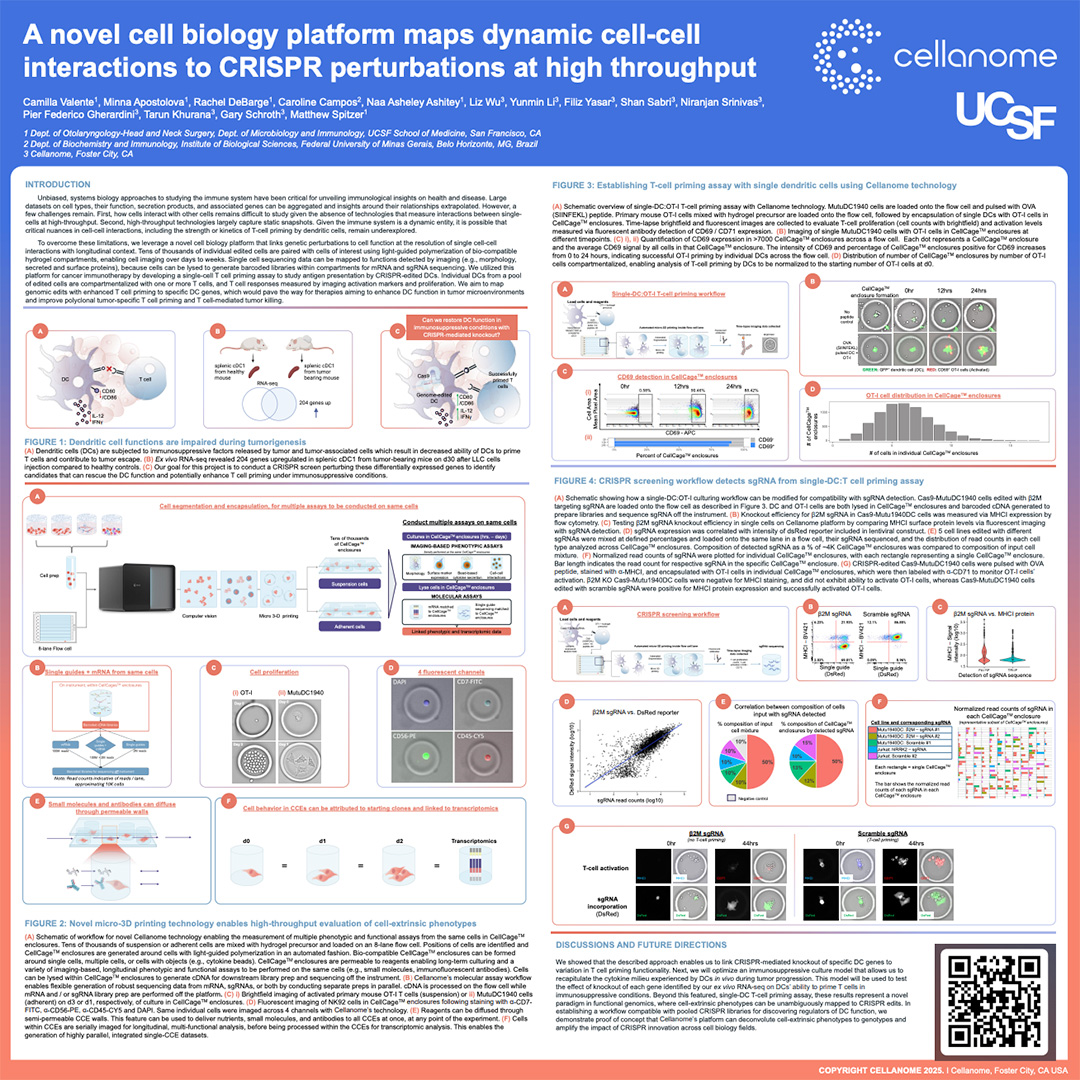
This poster highlights a cell biology platform for linking dynamic cell-cell interactions to CRISPR perturbations in cancer immunology. Individual edited dendritic cells are co-enclosed with T cells in CellCage enclosures, enabling real-time measurement of T-cell activation, proliferation, and interaction dynamics before matched sequencing. The workflow reveals how specific dendritic cell perturbations influence T-cell priming under conditions that model tumor-associated immune suppression. By combining live imaging with genomic readouts from the same compartments, the system captures function with much greater resolution than traditional CRISPR screens. The approach opens a scalable path for identifying gene targets that could enhance anti-tumor immune responses.
Case Study: Functional Profiling of Microglia in Neuroinflammation

Link microglial behavior to gene expression at single-cell resolution, for insight into neuroinflammation, drug response, and immune dysfunction in CNS disease.

View Case Study Details

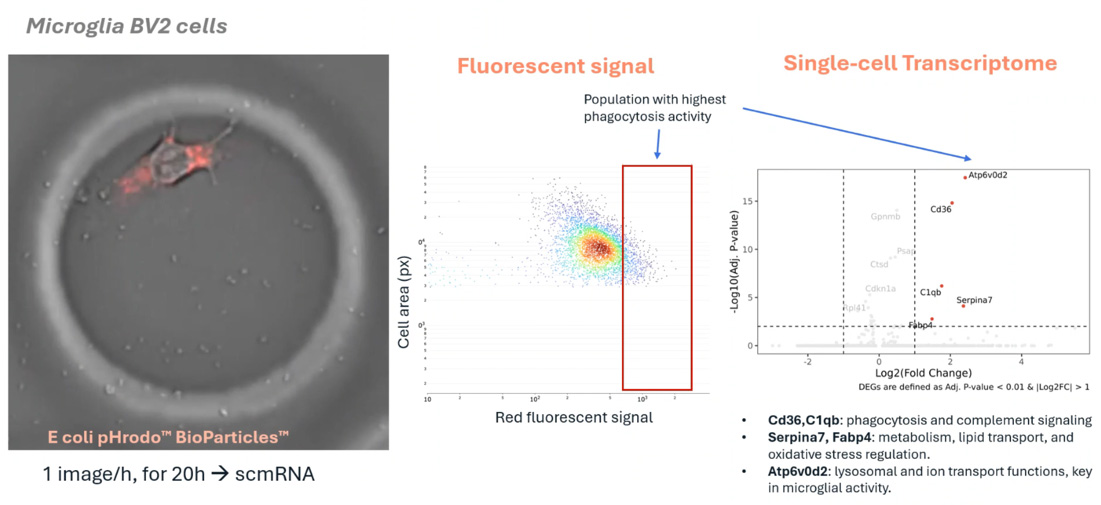
Researchers used the Cellanome R3200 to enclose individual microglia with fluorescent particles and track phagocytosis over 12 hours via fluorescent imaging. Each cell’s transcriptome was then sequenced, linking activity levels to gene expression.  

What They Found: 

High-activity microglia upregulated genes in complement signaling, lipid metabolism, and lysosomal function — key pathways in neuroinflammation and repair. 

Why it Matters: 

This approach overcomes key limitations in standard assays by capturing phagocytic function and gene expression in the same individual cells without dissociation, pooling, or inference. It enables a direct, scalable readout of immune heterogeneity, and reveals the transcriptional programs driving effective or impaired microglial responses.  

‍What’s Next: 

Extend to co-cultures by layering enclosed microglia over intact neuronal networks. Study how cell-cell interactions shape phagocytic behavior and fate. Combine with cytokines, CRISPR libraries, or immunotherapies to generate longitudinal datasets linking live-cell behavior with molecular readouts for MoA analysis, early biomarker discovery, and AI-guided modeling in CNS disease.

Case Study: Modeling Synapse Formation and Developmental Trajectories in 3D

Track development, function, and gene expression in intact neurospheres, a human-relevant 3D model increasingly vital as regulators move away from animal studies.

View Case Study Details

Stem-cell-derived neurospheres offer a robust 3D model of early brain development, but standard assays disrupt their structure and miss critical dynamics.  

Approach:

Using the Cellanome R3200, the research team explored:

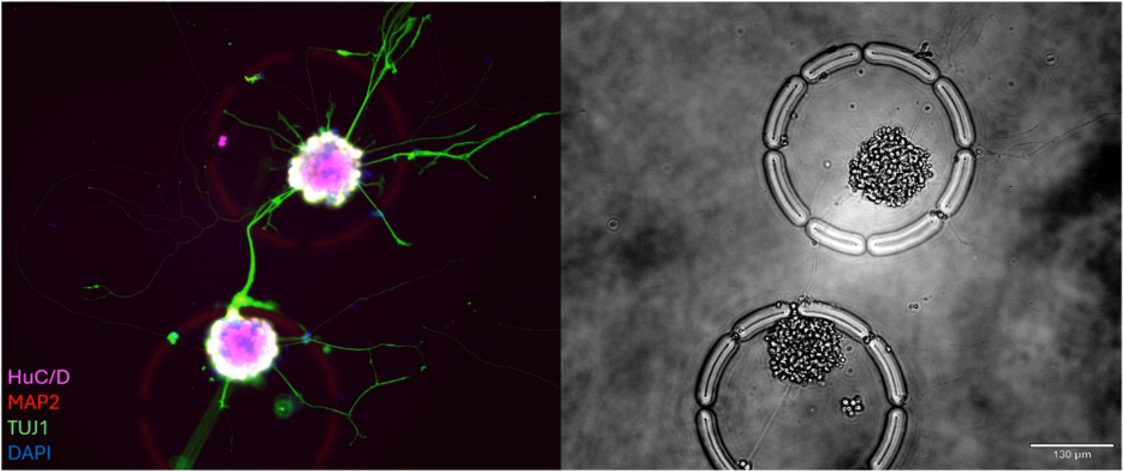
  • Hundreds of intact neurospheres (100–200 cells each) were cultured inside individual CellCage™ enclosures. 
  • Axon extension, synapse formation and calcium activity were tracked over multiple days. 
  • End-point RNA-Seq was linked back to each neurosphere’s functional behavior. 
  • UMAP clustering revealed lineage-specific gene programs, validated by fluorescent markers.  
‍What's Next:

This approach supports CRISPR-based screens to probe mechanisms of development, degeneration, and repair by linking perturbations to longitudinal functional and molecular readouts within preserved 3D architecture.

‍Why it Matters:

As the FDA and others move to reduce reliance on animal models, human-relevant in vitro systems like this are increasingly essential. 

FAQ's