

Resources: Posters
A High-Resolution Multimodal Platform for Decoding Enteric Neuroimmune Interactions in Inflammatory Bowel Disease
September 5, 2025
Cell Symposia: Neuro-immune axis - Charting the periphery
Elisabet Rosas Canyelles, Ph.D.
Keywords: R3200 Platform, CellCage technology, Enteric nervous system, IBD (Inflammatory Bowel Disease), Neuroimmunology, Single-cell transcriptomics, Longitudinal analysis
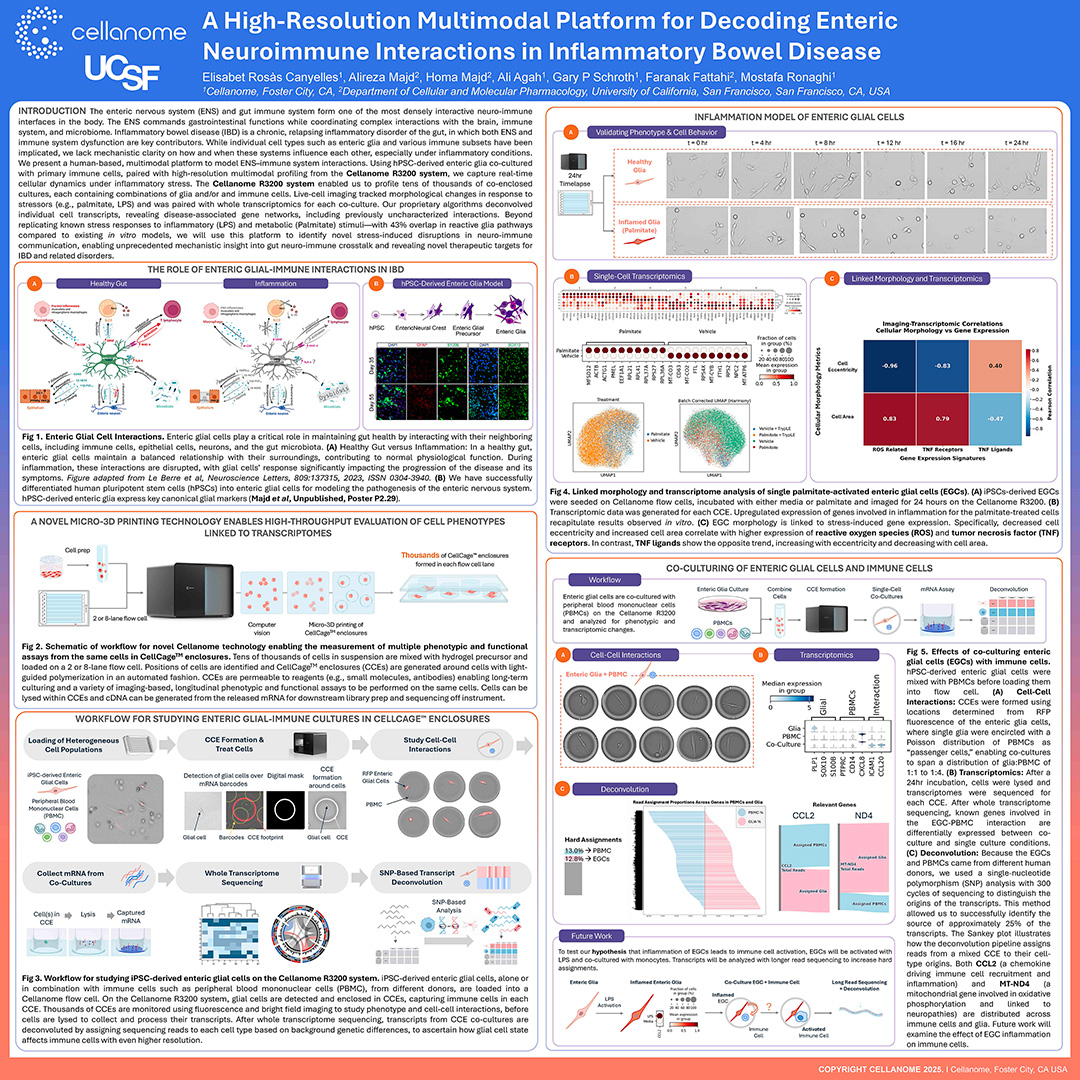
This poster presents a human-based multimodal workflow for studying enteric neuroimmune interactions relevant to inflammatory bowel disease (IBD). Using the Cellanome R3200 and CellCage enclosures, researchers co-culture hPSC-derived enteric glial cells with primary immune cells and capture both live-cell behavior and matched transcriptomic data from the same cultures. The platform reveals how inflammatory stressors such as LPS and palmitate reshape glial morphology, immune interactions, and disease-associated gene networks. By preserving functional context and enabling transcript deconvolution from mixed co-cultures, the workflow provides a more physiologically relevant view of gut neuroimmune crosstalk. This approach offers a promising framework for uncovering mechanisms and therapeutic targets in IBD.
FAQ's
How does the R3200 Platform facilitate the study of enteric neuroimmune interactions?
The R3200 Platform enables the simultaneous, longitudinal monitoring of enteric neurons and immune cells within the same microenvironment. By capturing real-time interactions and physiological changes, the platform allows researchers to map the functional signaling pathways that occur between the nervous and immune systems in the gut.
What role does CellCage™ technology play in decoding IBD mechanisms?
CellCage™ technology provides a stable, non-destructive environment for sensitive enteric cell types. This allows for the precise tracking of cell-cell interactions over time without the stress of traditional dissociation, ensuring that the resulting transcriptomic data reflects the true physiological state of the cells during an inflammatory response.
Why is a multimodal approach necessary for studying the neuro-immune axis in IBD?
IBD is characterized by complex interactions that cannot be fully understood through gene expression alone. A multimodal approach on the R3200 Platform combines visual phenotyping—such as neuronal firing or cytokine release—with transcriptomics, providing a comprehensive view of how neuroimmune crosstalk contributes to intestinal dysfunction.